The Science Behind pH Buffering in Baby’s Diaper
Bask Team
Baby Skin Health Expert
If you've ever wondered why some babies seem to get irritation no matter how quickly you change their diapers, the answer might not be about timing at all. It might be about pH.
What is pH, and why does it matter for baby skin?
pH is a measure of how acidic or alkaline a substance is, on a scale from 0 (most acidic) to 14 (most alkaline). Healthy skin, including baby skin, maintains a slightly acidic surface pH around 5.0 to 5.5. This "acid mantle" isn't just a number. It's an active part of the skin's defense system.
At an acidic pH, certain enzymes in the diaper area stay inactive. These enzymes, called proteases and lipases, are naturally present in stool and activated by urine. When they're switched on, they directly break down proteins and fats in the skin barrier, leading to irritation and redness.
What happens when urine enters the picture
Urine is alkaline, typically pH 6 to 8. Every time baby urinates, the pH of the skin in the diaper area rises. This shift does two things:
- It activates the fecal enzymes (proteases and lipases) that damage the skin barrier.
- It weakens the acid mantle, reducing the skin's natural ability to defend itself.
This is the primary mechanism behind most diaper-area irritation. It's not just wetness. It's the chemical cascade that wetness triggers.
What the research shows
Procter & Gamble published research in Pediatric Dermatology (2020-2021) exploring pH-buffered diaper care. Their findings suggested that maintaining skin's natural pH range is associated with improved comfort in the diaper area.
This built on what skin scientists had been exploring for years. pH management is widely recognized as one of the most meaningful factors in diaper-area comfort.
How the Bask Gentle Liner uses pH buffering
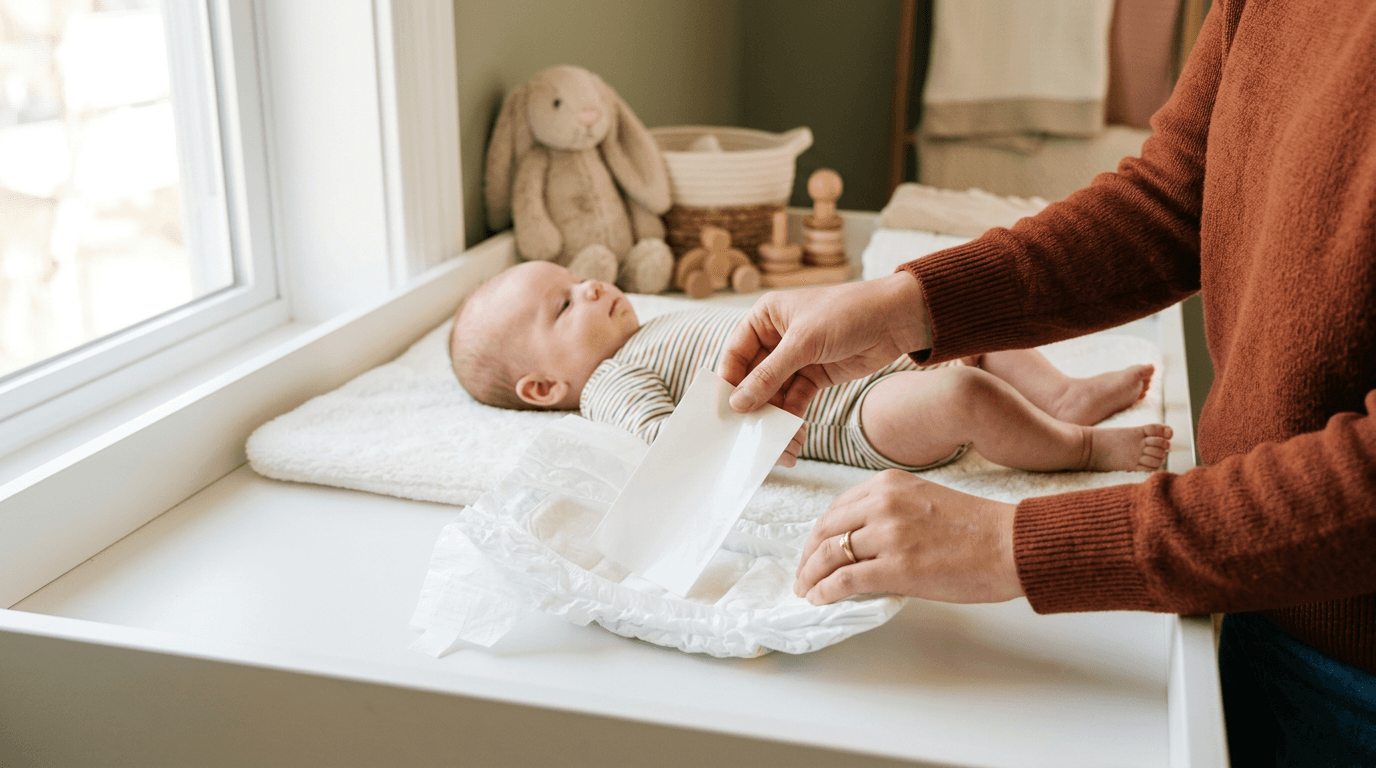
Every Bask liner contains a citric acid and sodium citrate buffer system. When moisture contacts the liner, the buffer dissolves instantly and helps maintain the slightly acidic pH that baby's skin naturally prefers. This happens automatically, every time, without any action from parents.
It's a small detail that makes a big difference. By helping keep pH in a comfortable range, the liner supports the skin's natural environment from the inside of the diaper.
We're the first product to deliver passive pH buffering inside the diaper, and we think it's one of the most important ingredients in our formula.